

Your LED Wall Is a Light Fixture (Design It That Way)
Last month I got to work on two lyric video projects for Easter — one for True Life Church in Delaware (truelife.church), one for Anchor Point Church in Foley, Alabama (anchorpoint.tv). Both churches wanted a big worship song moment for their Easter gathering. Both lead creatives care deeply about how the experience shapes people's encounter with Jesus.
And the finished videos couldn't have looked more different.
Not because I changed my approach mid-project. Because the rooms were completely different! And specifically, because their LED setups were completely different.
That contrast taught me something I've been chewing on ever since.
LED walls aren't screens.
They're light fixtures.
Projector screens receive light. LED walls emit it. That sounds like a technical footnote, but it changes everything about how you design for them. When you're building a lyric video for a projection system, you're working with a surface. When you're building for an LED wall, you're working with a light source that's actively shaping the atmosphere of the room. It casts light on the people standing in front of it. It affects how the stage looks. It contributes to the emotional temperature of the space.
Anchor Point's setup: a low center LED wall (4K, 16:9) onstage with raised projector side screens on either side. Their worship leaders stand in front of the wall so it's a backdrop. So we ran lyrics and words to the side screens and let the center LED wall do atmospheric work. For their Easter set, they had a monologue moment sandwiched between two sections from Elevation Worship's "Jesus Be The Name." The LED wall needed to support a devotional mood, so the approach was intensive imagery, slow movement, and light text animation. The wall was setting a tone, not leading a congregation.
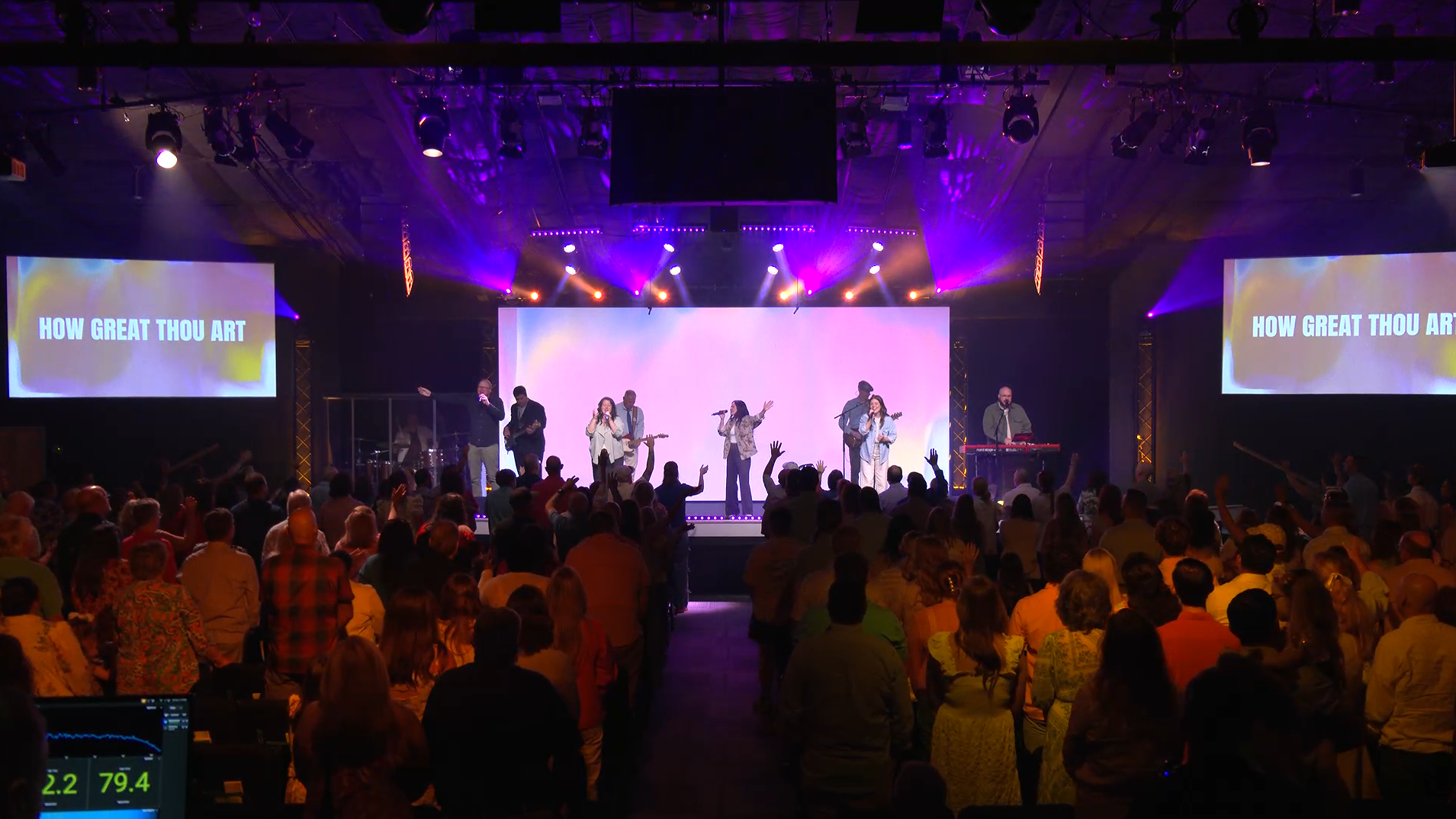
Anchor Point Church’s screen setup: Primary LED Wall backdrop in the center, projectors on the side.
True Life's setup is something else entirely. A custom configuration: a central raised 16:9 screen surrounded by detached columns and rows of additional LED panels spreading toward the congregation. When you're working with a setup like that, you stop thinking like a graphic designer and start thinking like a lighting designer. Each bank of panels is a tool. You can dial the experience in layers, introducing the panels closest to the congregation later in the song to build energy without being jarring about it. It's more like choreography than design.
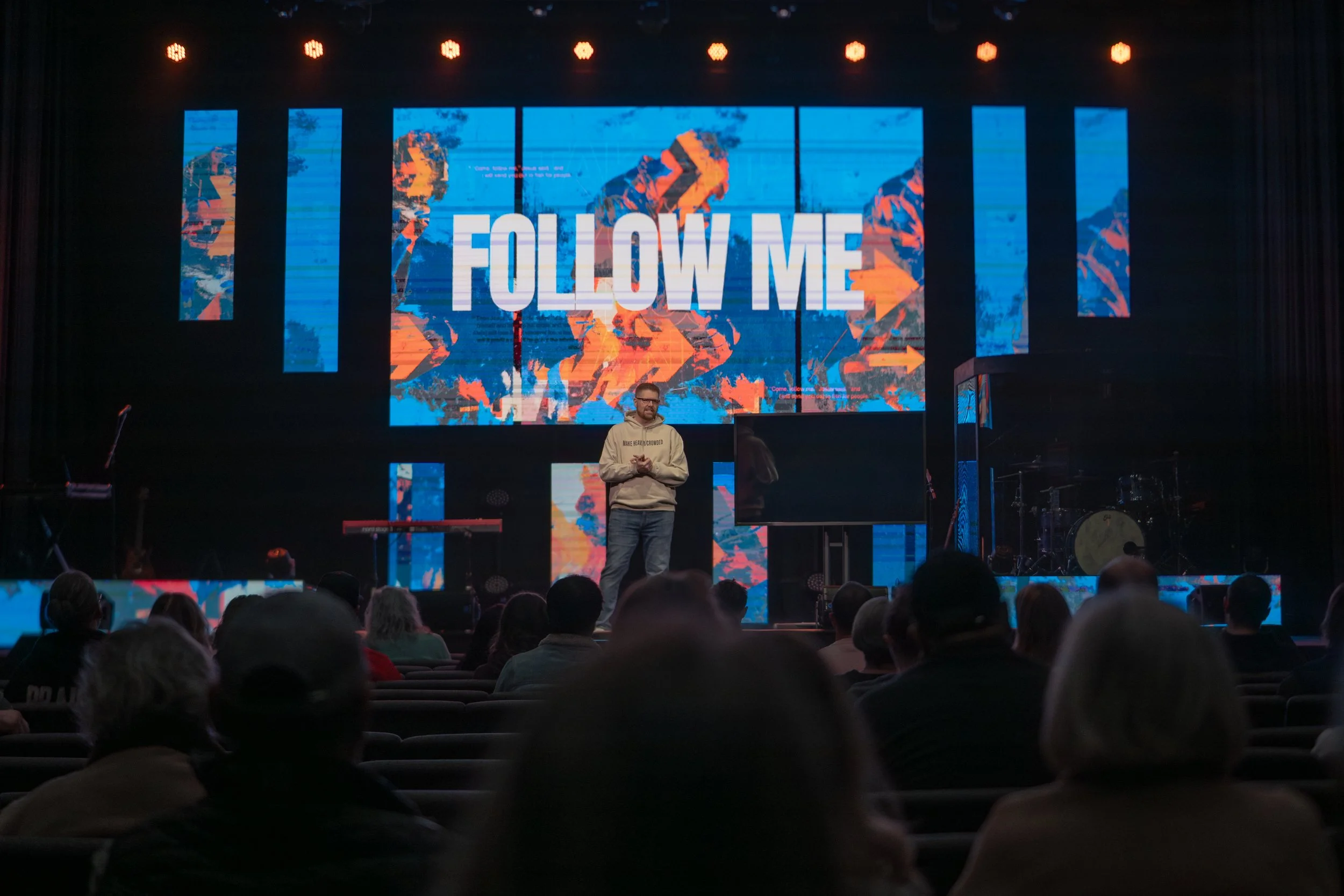
True Life Church’s LED Wall Setup
For True Life's Easter set, we went high motion because it wasn’t a full-congregation worship moment. Flashes and textures. Movement that matched the energy of the room, not just the tempo of the song.
Same process. Completely different outputs.
The process, regardless of the setup
No matter what the screen configuration looks like, my process for every lyric video is the same: (1) research the look, (2) lay out the script in Premiere — song sections, any spoken elements, transitions, (3) time-sync the lyrics, (4) build the visuals, (5) animate the text. I send updates to the church at each stage so there are no surprises by the time we're deep in final animation (which is time-intensive and hard to undo). By the time we're done, they're excited and they've been part of building it!
The question I always ask before I build anything
Is this for presentation or participation?
That's not a trick question — there's no wrong answer. Every church should focus on building a in-the-room experience that supports the discipleship goals for your local context. Some churches want their lyric video to look incredible on camera for a livestream audience. Some want the words big, legible, and impossible to miss so the whole room sings together. Those goals aren't always in conflict — but they produce very different design decisions around text size, contrast, and motion.
It's not my job to decide which one is right for your service. But if I don't know which you're going for, I'm guessing. And guessing leads to rework.
Cool doesn't mean effective.
I think about something I've heard Ezra Cohen say: "Cool video but I didn't feel anything." That hits different when you're making content for the church. Generating emotions isn't our job. But drawing attention to Jesus is. Building visual work that serves the mission of that gathering? Absolutely is. Any chance you get to align your visuals with the pastor's intention for that moment is a win.
Cool for cool's sake shouldn’t be enough for you. Effective for the mission — that's the goal.
But also, cool recognize cool. It’s good to have fun too!
If you want to see how both projects came together, the full breakdown with footage is up on YouTube this week.
Want to see my final videos for inspo (or to roast them)? Check them out below!
